College Grocery List: Spend 40% Less on Food

Reading time: 9 minutes
For over a year I kept and compared every single grocery receipt. The result: with a well-thought-out college grocery list I brought my monthly food costs down from $310 to $188. That is $122 more a month that I now have for more important things. No magic, no crash diet, just smarter shopping.
The turning point came in March 2024, when I walked out of a spontaneous Whole Foods trip having spent $48 on two days' worth of food. That evening I decided to completely overhaul my system. Today I will show you exactly how I did it.
The Biggest Mistake: Going to the Store Without a Plan
Before I developed my system, I went grocery shopping two to three times a week. Always after class, always hungry, always without a concrete list. The result was full carts of products I didn't actually need. According to a 2024 study by the Verbraucherzentrale NRW (a German consumer advice center), students without a shopping list spend an average of 38% more than planned.
My biggest problem was those impulse buys: premade wraps for $5.99, smoothies for $4.49, snacks for in between. By the end of the week I had bought over $80 worth of groceries but still had nothing decent to eat in the fridge.
What Concretely Changed
Since April 2024 I only go grocery shopping once a week. Saturdays at 9 a.m. at the Aldi near campus in Chicago, when the store is still relatively empty. With a detailed college grocery list that I already put together on Thursdays. These two days of lead time matter because they let me still check the deals and adjust my plan.
My 4-Step Method for the Perfect Grocery List
I always plan for 7 days, so Saturday through Friday. I never shop on Sundays, which saves me the temptation of spontaneous trips to the corner store.
Step 1: Weekly Planning With a Leftovers Check
On Thursday evenings I look in my fridge and note what is still there. Then I plan my meals backwards. If I still have half a package of pasta and two bell peppers, Saturday is pasta with vegetables. That way nothing ends up in the trash. Germany's Federal Ministry of Food and Agriculture determined in 2024 that German households throw away an average of 78 kilograms of food per year. That corresponds to about 234 euros (roughly $255) that literally end up in the garbage can.
I plan concretely: Monday roasted vegetables with couscous, Tuesday vegetarian chili, Wednesday leftover chili, Thursday scrambled eggs with bread, Friday pizza toast. Breakfast for me is always oatmeal with a banana, which simplifies planning enormously.
Step 2: Calculating Quantities Based on Real Needs
For one person I need per week: 1 lb oats, 2 lb potatoes, 1.5 lb pasta, 3 cans of tomatoes, 2 cans of chickpeas, 1 package of tofu, 6 eggs, 16 oz low-fat Greek yogurt, 1 quart of milk, 4 bananas, 2 bell peppers, 1 head of broccoli, 1 onion, 2 cloves of garlic.
I worked out these quantities by trial and error. In the first two weeks I still had too many vegetables, which went bad. Now it fits perfectly. If you live with a partner, you don't simply multiply by two but more like by 1.7, because many staple ingredients can be shared.
Step 3: Comparing Discount Stores With Fixed Rules
I buy 80% of my things at Aldi because the price-quality mix fits me best. According to a February 2024 analysis by the German consumer organization Stiftung Warentest, Netto, Penny and Lidl are the cheapest options in Germany for students on a small budget. Aldi Nord is on average 3% more expensive, and Rewe and Edeka are 25-40% above discount level.
My exceptions: I buy oats at Walmart, because the 42 oz canister there costs $3.98 instead of $4.79. I get tofu at Lidl, where the store-brand organic tofu is $1.89 instead of $2.49. These small differences add up. Over a month I save another $9 that way.
Step 4: The List Becomes a Permanent Document
I use a simple spreadsheet with three columns: product, quantity, store. I saved this spreadsheet as a template and adjust it minimally every week. The advantage: I don't have to rethink which staple ingredients I need every time. That saves me about 15 minutes on Thursdays.
I also have a fourth column with estimated prices. That way I already know before shopping that I will land at roughly $42-46. If I am clearly over, I double-check whether I really need everything.
Concrete Tips That Make the Difference
These details brought me the biggest savings:
- Store brands instead of name brands: I buy Aldi oats instead of Quaker and save $0.75 per package. With two packages a month, that is $18 a year.
- Seasonal vegetables: In winter I cook with cabbage, carrots and potatoes. A pound of green cabbage costs $0.79 in January, while tomatoes cost $3.99. In summer I flip that around.
- Bulk packs only for shelf-stable products: I buy rice, pasta and canned goods in large packages. For fresh produce I stick to small amounts, otherwise it rots.
- Never shop hungry: It sounds trivial, but when I go shopping at 2 p.m. after lecture without lunch, I guarantee I end up at $62 instead of $45.
- Ignore coupon apps: I uninstalled the store loyalty apps and cash-back apps. They only tempt me into purchases I wouldn't otherwise make. Better to consistently stick with the cheap discounter.
My Realistic Weekly Budget: $42
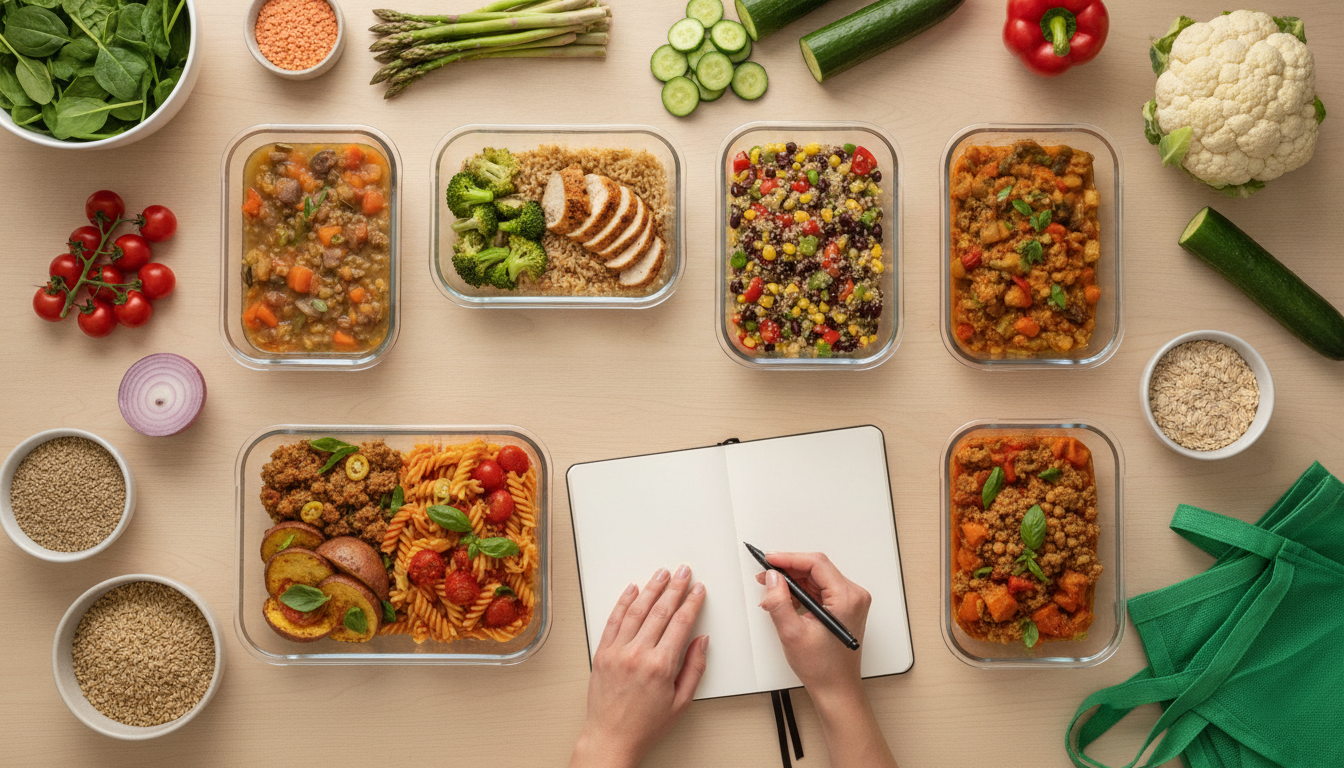
With my college grocery list I average $42 per week. Extrapolated, that is $180 a month. On top of that comes about $8 for occasional top-up trips when I do run out of something. In total that puts me at $188 a month.
For comparison: according to the Deutsches Studentenwerk (the German student services organization), the average in 2023 was 168 euros (about $183) per month for food. So I am slightly above, but that also includes quality organic products for eggs and milk. If you skip organic entirely, you can save another $15-20.
This structure also helps me with splitting my semester fees and overall budget planning, because I know exactly how much I need to budget for food each month.
What I No Longer Buy and Why
I decluttered radically. These products have disappeared from my list entirely: ready meals of any kind, bagged salads, cut-up fruit, single-serve yogurts, soft drinks, jarred sauces, frozen pizza. Not for health reasons, but because the value for money is miserable.
One example: a frozen lasagna at Whole Foods costs $6.99 for 14 oz. When I make lasagna myself, a serving costs me about $1.50 with better quality and a larger portion. On Sundays I cook ahead for 90 minutes and have food for three days. That works perfectly alongside classes.
Exceptions I Deliberately Treat Myself To
I don't give up everything. Once a week I buy myself a good coffee from a barista for $4.50. That is my fixed ritual after Wednesday's lecture. This conscious luxury is more enjoyable than three average purchases that I don't even think about afterwards.
I also eat out once a month, budget $30. I plan that in firmly and look forward to it. That way saving doesn't feel like deprivation. If you are looking for more ways to boost your budget, you can also check out my article on the meal plan for college, which goes into even more detail.
The 3 Biggest Pitfalls I Had at First
Mistake number one: plans that were too ambitious. In my first week I wanted to cook five completely different dishes. That didn't work. Now I repeat components. If I make roasted vegetables on Monday, I immediately prepare double the amount and eat it on Tuesday with couscous instead of potatoes.
Mistake number two: buying exotic ingredients. I once bought tahini for a recipe, $5.99. I used it once. Since then I stick to a maximum of 15 staple ingredients that I really use regularly.
Mistake number three: forgetting the list at home. It still happens to me sometimes. That is why I now also have it as a photo on my phone. It sounds simple, but it has already saved my bacon three times.
How Much Time Does the System Really Cost Me?

On Thursdays I set aside 20 minutes to create the college grocery list. On Saturdays I am out for 45 minutes, including the round trip by bike. On Sundays I cook ahead for 90 minutes. That adds up to 155 minutes per week.
Before, it felt like I was constantly on the move, a quick stop here, a spontaneous one there. When I add that up, it was certainly 4-5 hours per week. So I save not only money but also time. I would rather invest that time in my part-time job or simply in free time.
Frequently Asked Questions About the College Grocery List
How do I create a cheap grocery list for a week?
Start by taking stock of your supplies. Then plan 5-7 simple dishes that share ingredients. Write down only what you really need, and stick strictly to that list in the store. Rely on seasonal vegetables and store brands.
Which discount stores are cheapest for students?
Discount grocers such as Aldi and Lidl offer the best value for money. According to Stiftung Warentest (February 2024) in Germany, the three cheapest chains there (Netto, Penny and Lidl) come in on average 25-40% below Rewe and Edeka. Aldi Nord is about 3% more expensive than the top three, but depending on the location a good alternative.
How much should I budget for groceries each month as a student?
With careful planning you can get by well on $160-200 per month. That corresponds to about $38-46 per week. If you value organic quality for certain products, you should budget closer to $220.
Is meal prep really worth it for saving money?
Absolutely. If you cook ahead for 90 minutes on Sundays, you not only save time during the week but also avoid expensive impulse buys at the campus dining hall or the bakery. I estimate I save about $65 a month that way.
How do I keep food from going bad?
Only buy amounts you can realistically use within 7 days. Fresh vegetables go in my crisper drawer, and I put herbs in a glass of water. I freeze bread in portions and only thaw what I need. That way practically nothing ends up in the trash anymore.
Conclusion: A Grocery List Is Your Best Money Saver
My college grocery list has saved me over $1,450 in 12 months. That is not a little, considering all I did was adjust my habits. No complicated recipes, no extreme sacrifices, just shopping in a more structured way.
The most important tip: start small. For the first week, plan just 3-4 simple dishes. See how much you really eat. Adjust the quantities. After three weeks you will have found your system and won't have to think about it much anymore.
You can put these savings to good use, for example to build a cushion or to treat yourself now and then. If you are looking for more sources of income, also check out my overview of ways to make money as a student. With the money you save and a small part-time job, you will get through the semester much more relaxed.